Guides for families caring for someone they love

Practical answers on care options, costs, legal planning and daily support.
3 Reasons You Should Consider an Elder Care Law Attorney

3 Reasons You Should Consider an Elder Care Law Attorney

It is a fact that as one progresses in age, legal concerns become a bit more complicated than those that existed during the earlier years. At such a point in time, it is imperative that individuals and families consider hiring an elder care lawyer to help address these concerns. What is Elder Law? Elder law […]


Read More
Annuities and Their Impact on Qualifying for Medicaid and VA Benefits

Annuities and Their Impact on Qualifying for Medicaid and VA Benefits

Annuities are a complicated subject and even more so when it comes to their effect on the Medicaid or VA Aid and Attendance application process. How can an annuity impact a person’s ability to qualify for Medicaid or VA benefits in the future? Before I answer the question, let’s start with some basics. Annuities are […]

Read More

USE 529 PLAN TO SAVE EDUCATION EXPENSES

If you’ve heard of a 529 Plan, you probably think of it as a means of education funding for your children or your grandchildren. These plans are sponsored by state agencies or educational institutions, and they’re available to people of all income brackets. While a 529 Plan is a great tool for saving for college, […]

Read More
Guardianships & Conservatorships and How to Avoid Them

Guardianships & Conservatorships and How to Avoid Them

If a person becomes mentally or physically handicapped and can no longer make rational decisions about their person or their finances, his or her loved ones may consider a guardianship or a conservatorship whereby a guardian would make decisions concerning the physical person of the disabled individual, and conservators make decisions about the finances. Typically, […]

Read More
What Makes a Will Valid?

What Makes a Will Valid?

Movies, television, and books like to present wills in dramatic ways–handwritten notes, videos, deathbed utterances–but what actually makes a will valid? The law varies depending on what state you live in, but there are some basic rules. The legal requirements for a will are fairly simple. In order for your will to be valid, you […]

Read More
Are Adult Children Liable For Their Parents’ Long Term Care Debt?

Are Adult Children Liable For Their Parents’ Long Term Care Debt?

Have you ever heard of state “filial responsibility” laws?  Although rarely enforced, 29 different states have laws that require children to provide financial support to their indigent parents under certain circumstances.  In the context of long term care, those statutes could potentially result in adult children being liable for their parents’ sizable nursing home and […]

Read More

Signs and Symptoms of Sundowning Behavior with Alzheimer’s Patients

People who have spent a great deal of time with those with Alzheimer’s disease begin to notice behavioral patterns that are common between them. One of the most commonly recognized behavioral patterns associated with dementia is confusion, agitation and aggression associated with the late afternoon when the sun is setting. This phenomenon is known as […]

Read More
Medicaid planning: Beware of the look-back period before applying

Medicaid planning: Beware of the look-back period before applying

As a person ages, their medical care needs might increase. This comes at a time when their income might be decreasing. By the time they are retired, they might need considerable care, but they might not have the money to cover that care. There are two programs that senior citizens might be able to use […]

Read More

Why Not Just Use an Off-the-Shelf Power of Attorney Form?

A durable power of attorney is one of the most important estate planning documents you can have. It allows you to appoint someone to act for you (your “agent” or “attorney-in-fact”) if you become incapacitated. Without a power of attorney, your loved ones would not be able to make decisions for you or manage your […]

Read More
Myths and Facts About Probate

Myths and Facts About Probate

I just need a Will and a Living Will. This will avoid “probate” and allow someone to make medical decisions for me if I cannot express myself. Not true. A Last Will and Testament is a “road map” that expresses how someone wants their estate (financial and personal belongings that exist at the time of […]

Read More

Common Types of Nursing Home Abuse and Neglect

When your elderly family member moves into a nursing home, they should expect high-quality care and appropriate medical treatment. Unfortunately, that does not always occur, and patients often experience serious physical and mental injuries, whether they are at a facility with a sterling reputation or one with a history of problematic behavior. Resident rights are […]

Read More
10 COMMON MISTAKES PEOPLE MAKE WHEN APPLYING FOR MEDICAID

10 COMMON MISTAKES PEOPLE MAKE WHEN APPLYING FOR MEDICAID

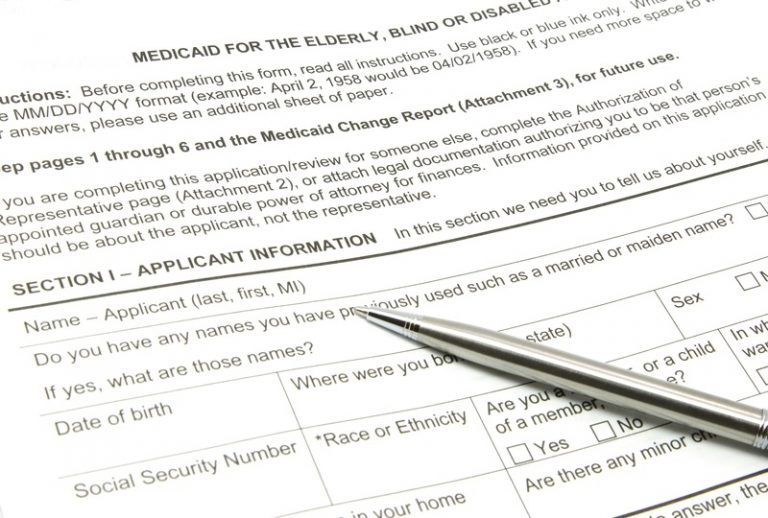
Though the aging population continues to get larger, there is more need for long-term care. However, since most elderly Americans do not have long-term care insurance or have the assets to be self-insured, many people are dependent upon Medicaid, as Medicare’s coverage is much more limited when it comes to longer-term costs. The government helps […]

Read More
10 Most Common rule About Medicaid

10 Most Common rule About Medicaid

1. I can’t give away anything and qualify for Medicaid. This is a complicated area of the law and readers should consult with a Certified Elder Law Attorney before they transfer their assets. Although transfers between spouses are exempt, transfers to persons other than spouses usually subject the donor to penalties that result in periods […]

Read More
Qualifying for Medicaid and Protecting the Family Home

Qualifying for Medicaid and Protecting the Family Home

Protecting the family home is one of the biggest issues that people worry about when discussing Medicaid eligibility. Let’s look at some of the basics: While you generally don’t have to sell your home in order to qualify for Medicaid coverage of nursing home care, it is possible the state can file a claim against […]

Read More
GETTING PAID AS A FAMILY CAREGIVER THROUGH MEDICAID

GETTING PAID AS A FAMILY CAREGIVER THROUGH MEDICAID

Caring for an ailing family member is difficult work, but it doesn’t necessarily have to be unpaid work. There are programs available that allow Medicaid recipients to hire family members as caregivers.  All 50 states have programs that provide pay to family caregivers. The programs vary by state, but are generally available to Medicaid recipients, […]

Read More
My Parent Needs More Care, Now What?

My Parent Needs More Care, Now What?

Across America, in virtually every neighborhood, families are struggling to find answers to their parents’ senior living needs. Faced with this daunting task, the first thing you need to do is take a deep breath. Getting worried, worked up, stressed, or frustrated will not help the situation. Second, start with these first steps that I’ve […]

Read More
Transfer of assets was not made for Medicaid purposes

Transfer of assets was not made for Medicaid purposes

The cost of nursing home and home care can be prohibitive for people who do not have long-term care insurance. Often, Medicaid purposes is the only viable option. When applying for nursing home Medicaid, the Medicaid agency will review the applicant’s (and spouse’s) financial history for the five years prior to the requested beginning date […]

Read More
VA’s Eligibility Requirements for Non-Service Connected Benefits

VA’s Eligibility Requirements for Non-Service Connected Benefits

Effective October, 18, 2018, the law regarding VA Eligibility Requirements for a veteran (or spouse) to receive non-service connected benefits changed. This new law regarding the VA’s Aid and Attendance pension benefit imposed a 3 year look back and it established a net worth limit of $127,061 (in 2019), which will increase each year with […]

Read More
When is a person unfit to make a will?

When is a person unfit to make a will?

Testamentary capacity refers to a person’s ability to understand and execute a will. As a general rule, most people who are over the age of eighteen are thought to be competent to make and sign the will. They must be able to understand that they are signing the will, they must understand the nature of […]

Read More
WHAT IS A SPECIAL NEEDS TRUST?

WHAT IS A SPECIAL NEEDS TRUST?

A Special Needs Trust (SNT), sometimes called a Supplemental Needs Trust, provides for the needs of a disabled person without disqualifying him/her from benefits received from government programs like Social Security and Medicaid. A Special Needs Trust makes it possible to appoint a trustee to manage assets and qualify or retain for public assistance benefits. […]

Read More
SEVEN SIGNS THAT A CHILD IS FINANCIALLY ABUSING AN OLDER PARENT

SEVEN SIGNS THAT A CHILD IS FINANCIALLY ABUSING AN OLDER PARENT

Unfortunately, financial exploitation of older individuals is an all too common occurrence in our country.  The National Council on Aging estimates that as many as 1 in 10 Americans over the age of 60 has experienced some sort of elder abuse.  And what many people don’t realize is that a large portion of those incidents […]

Read More
Effect of Spouse’s 401(k) on Medicaid Eligibility and Recovery

Effect of Spouse’s 401(k) on Medicaid Eligibility and Recovery

Medicaid is a jointly funded, Federal and State program which offers broad medical services to individuals who are blind, aged (over 65), or disabled. Medicaid also has a program for low-income individuals, but this article will focus on Medicaid for the blind, aged, and disabled. Specifically, this article will address the effect of a spouse’s […]

Read More
Here Are Some Rules About Medicare That You Need to Know

Here Are Some Rules About Medicare That You Need to Know

Enrolling in Medicare allows older adults to take advantage of many services and benefits. However, some of the rules about Medicare can be challenging to understand, including those governing stays in nursing facilities. Medicare pays for skilled rehabilitation and nursing care in a skilled nursing facility (SNF) if a Medicare beneficiary is admitted as a […]

Read More